

creative prompts to trust your steps and let your practice be more wild
make more confident work and tame the wild horse in your art

Howdy! As we are nearing the end of June, here is your creative prompt email to support your practice and persistent blooming. Before I get into the prompts, I wanna let you know a few things!
If you are feeling isolated in your creative practice and you are looking for community and encouragement, consider joining the Persistent Bloom Discord Server.
Do you wanna have a more organized computer, phone, or cloud storage but feel overwhelmed? I’m teaching a class to show you how to manage and do it together called The Week of the Archivist from July 17th-23rd. Each session will be recorded with replays available. Join the waitlist here for a special discount code & be first to learn more : )
I extended the summer sale on my self-directed creative craft classes through mid-July. No magic code needed, instant access to the class portals upon purchase.
Ok that’s it, let’s get into the prompts. BTW, these are for human artists, writers, and thinkers. I recommend answering them into Voice Memos, your journal, or your notes app. Just think, respond quickly, and do not edit. Also, don’t use them with or in tandem with generative AI tools, that’s not what they’re for. I don’t use any LLMs or generative AI in any of my work. 🤠
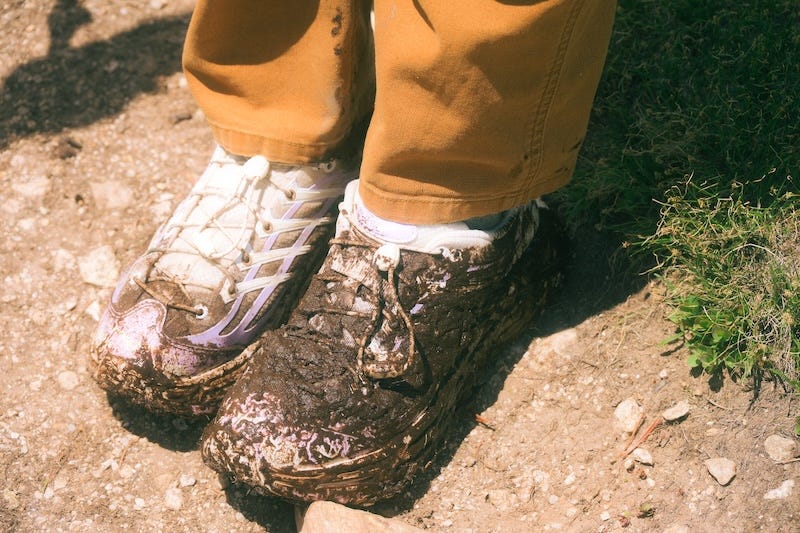
What path feels unsteady, but your passions can guide you to make a big leap?
When I was hiking in the Sierras there were several water crossings with very wobbly granite boulders or way deeper mud than I expected. At certain points I had my shoes, pants, and socks soaked by freezing snowmelt rivers to the knees, but I kept trodding along regardless. Imagine this kind of crossing with the work you are making right now.
What work (individual pieces, a series, a song) is almost ready to hold the weight of your passion? What could make it feel a bit more stable and ready to hold your creative voice fully?
Are there pieces you are working on that feel just a step or two from being complete but you are hesitating slightly because you are uncertain? What if you embraced the uncertainty and potential for failure?
Can our uncertainty with our work be a clue that we are on the path to a breakthrough we can bring to other things in our life?
Look at your practice as a whole, which things are the strongest, that you feel most proud of? Which are the weakest? What is the gap between them with exciting possibilities?
If your work is deeply transforming or changing, what aspects are holding the most emotional weight? Can you step firmly into them?
Are there ideas you are intentionally avoiding because they feel outside your realm of control?
Yesterday in Emergent Classroom, we had a really potent discussion on our live call where one of our members compared their art practice to that of a wild, untamed horse. I can’t stop thinking about how poignant that is! More often than not when I am working in a newer medium or with a technique I feel less certain about, I will run around and avoid it. Bucking myself off the path constantly. This is why I spent years having a process that was rigid and controlling that went like this:
take photographs or screenshots
arrange them in photoshop/procreate
make the painting, entirely digitally, work out the shapes of brushstrokes, and play with forms — all with an undo button
find the edges of each brush stroke and trace them, with a projector onto a final canvas or panel
make the painting like a paint-by-number print machine, do not stray from the plan at hand.
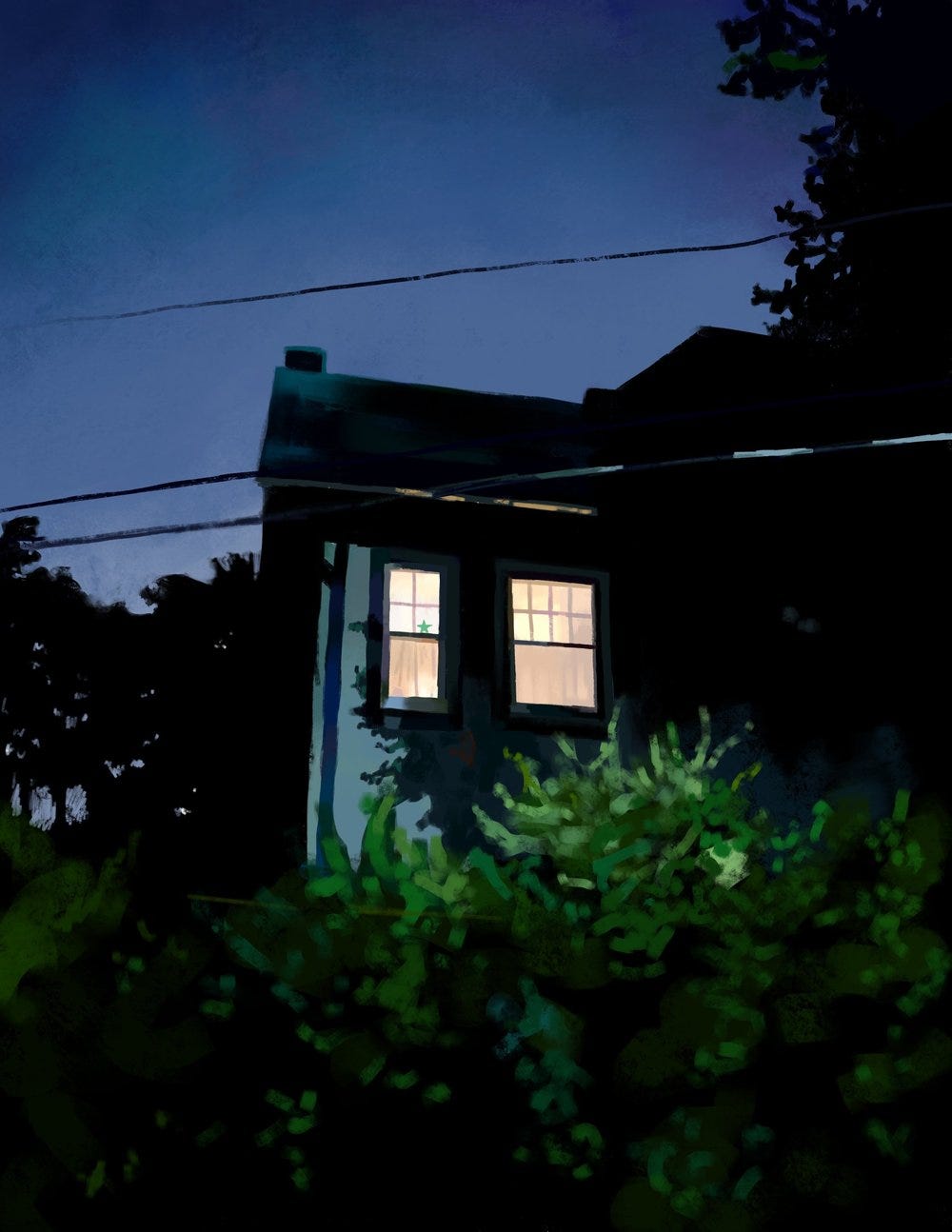
All of this rigidity was from a fear of failure and the pressure to perform my practice well enough for professors and peers. Now, I try to allow the paintings to roam more free, to take a bit more of my authentic hand into consideration and allow the result to surprise me. The wild horse analogy perfectly encapsulates that sense of surprise, of letting our intuition do the work, and dance with the materials.
Here’s what I’d like you to consider:
Have I become to rigid in templating my work or process into an expected rhythm? What would it mean to embrace more mistakes or whimsy in the process?
Can I run with the feeling of leaping? Listening to my animal body guiding me in the movements?
What could happen if I let go of my fear of failure/ what my ego wants the work to look like?
What impulses or inspirations am I suppressing because they are impractical, feral, or wouldn’t fit neatly into my larger body of work? Could a big evolution for my practice be hiding beneath them?
How am I avoiding my practice in general because of this feeling that what I make won’t have enough value or be understood in the way I’d like?
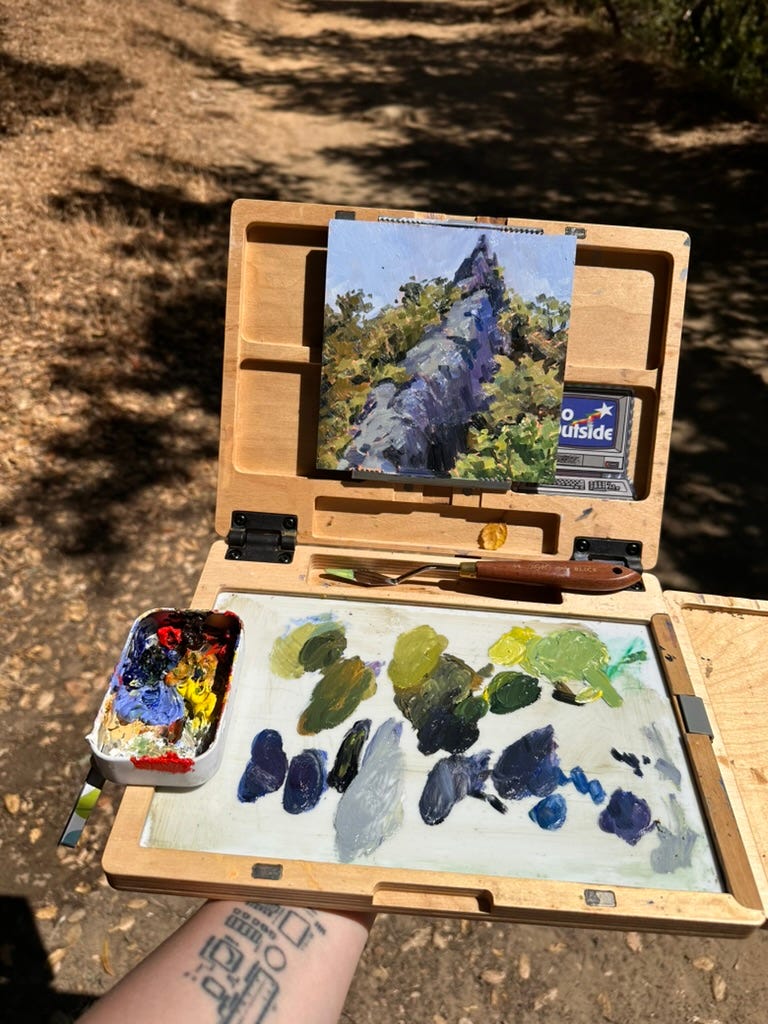
Many of these questions find their answers by responding to prompts, systems like Oblique Strategies, tarot or oracle decks1, mindfulness art actions like plein air painting, or collaborating with others. I hope you find them nourishing and supportive this month as you tame the wild horse in your own work.
An exercise to find real clarity on the meaning and purpose of your work
Have you ever read the text on the wall next to a work of art in a museum and walked away feeling more confused or disconnected from the art than you hoped? In some ways this is unfortunately intentional.2 That wall text is what is known as tombstone information. Wild name, but true description. These opaque texts are why I have always hated writing artist statements or contorting to the language of the traditional art world.
Doesn’t the idea of tombstone information for art feel wrong?! Tombstones are for grieving! Art isn’t dead! It doesn’t need an obituary, it needs a living, values-aligned document to guide the ideas forward.
Our work is alive, it breathes! It goes through phases of death and rebirth, of constantly changing and shifting. We roost in new places and find new battles within our practices all the time. There is no absolute or perfect statement to encapsulate the work we make. If we write an artist statement, it will likely feel stale within 6 months, if not sooner.
Below the paywall, I am walking paid subscribers through an exercise inspired by the reflective cycle that is the opposite of an artist statement. I’ve kept a list just like this since 2011, and it is my favorite way to sit and savor with the reflective cycle. It functions as a map you can always come back to. It can grow and change with your work while helping you find clarity on your path to keep persisting.
Keep reading with a 7-day free trial
Subscribe to Persistent Bloom to keep reading this post and get 7 days of free access to the full post archives.