

on making things that feel intentionally human and anti-ai
my own journey back to what feels human and how I built a class on it

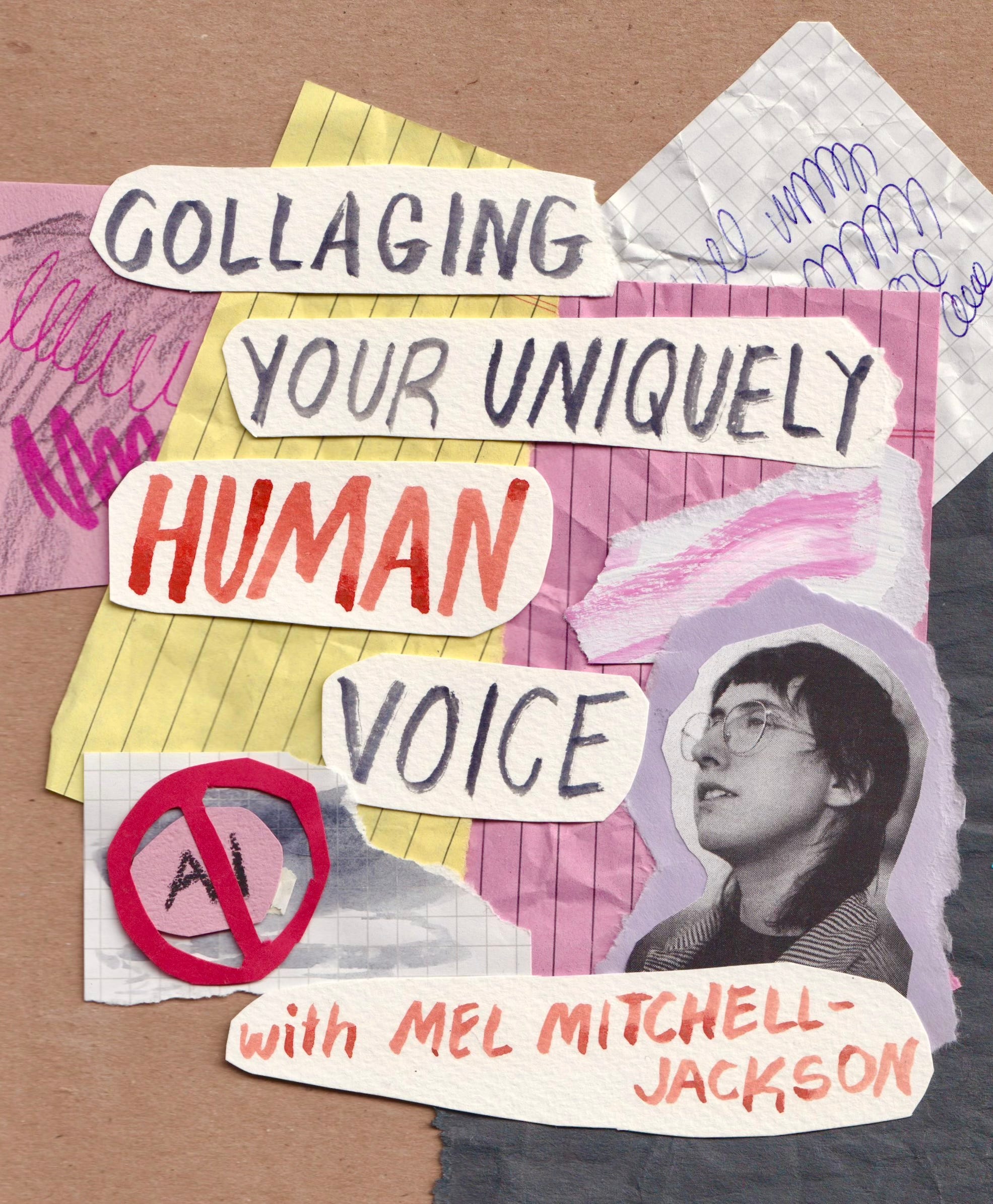
Next week, I’ll be teaching my second live creativity class of the year, Collaging Your Uniquely Human Voice. In two live sessions on Thursday mornings at 9:00 AM PST, I’ll teach you how to work with collage to make flyers, posters, and use a tiny bit of Procreate magic to turn your paper creations into assets for your digital and IRL world.
Before I get into details about collage class, if you are feeling stuck and stalled out right now on all creative craft because the state of the world is AAAAAAAAAA! I see you, and I made this video for you as a quick lesson to help you come back to making:
As a reminder we can work together in craft tutoring & creative retreats if you need some personalized support. I’d love to be your guide right now!
Also, another great way to feel better about AAAAAA is to call your Senators this week if you are in the US and tell them to DEFUND ICE! There’s info on how to do that on 5 Calls here, and it has helpful little scripts to help you overcome phone anxiety for free:
What inspired this class?
Last year, I finally got frustrated enough with ai-generated YouTube thumbnails and the flood of Substack essay graphics that were clearly ai to take action. I knew in my soul I wasn’t alone in feeling the ick and that something had to give. My repulsion turned to a simple question: How do I make sure the way I show up online is the opposite of this?
I started by returning to and looking through some old watercolor work. In a way, collage has always been a part of my practice, whether I was collecting and curating images on Tumblr, layering windows on my Mac screen, or playing with different cuts and layers in Procreate as an initial sketch. I always worked with versions, movement, and play in my work until things felt just right.
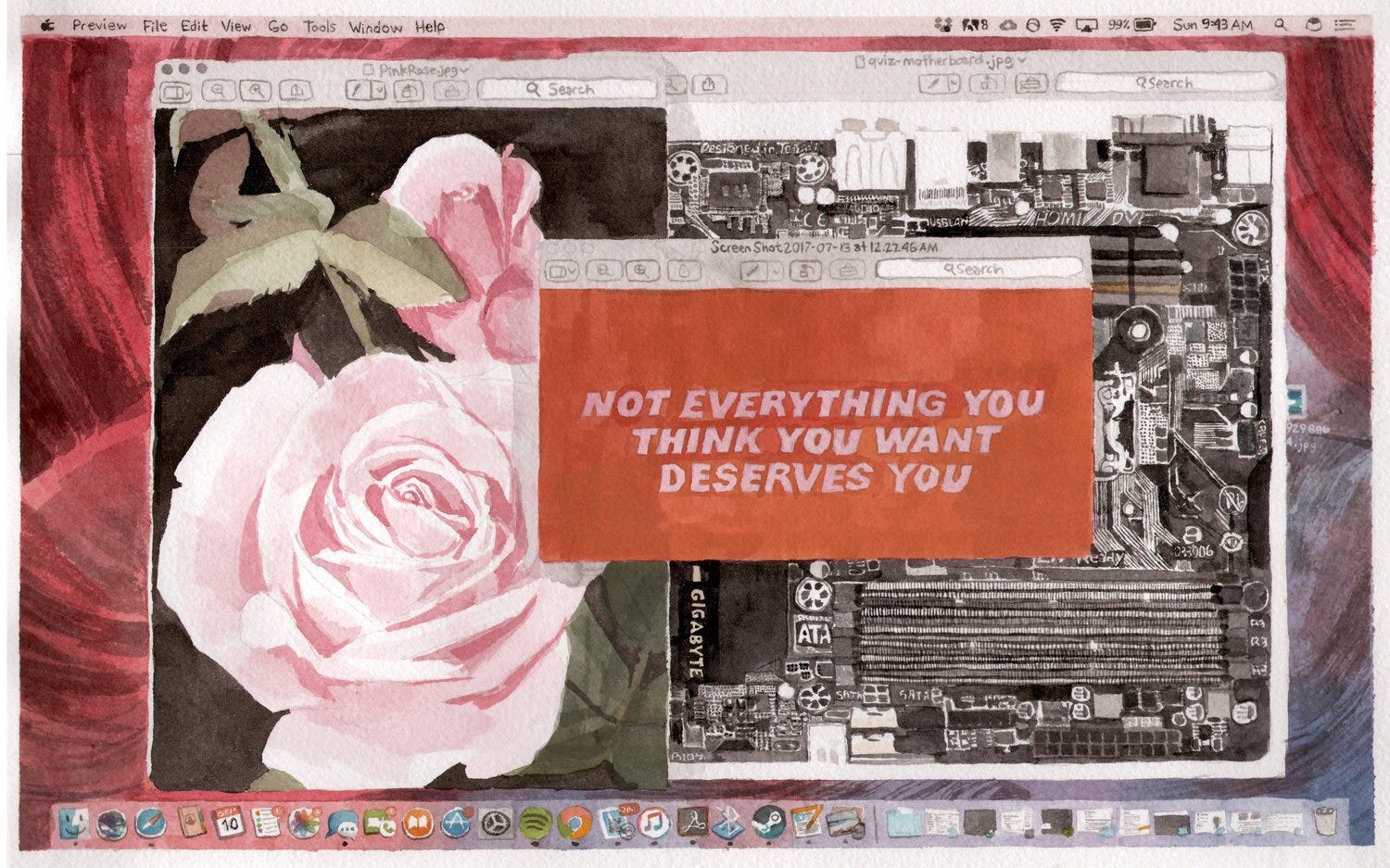
My sense of play was limited to the digital world. The places where I could save multiple versions and use the undo button for safety. Old-school graphic design and illustration worked differently — with cut paper, white out, and physical versions moving around on a desk. Before computers, all design was done by hand, then sent to print. Things moved so much slower, with far more intention and attention to details.
In the middle of last year, during this flood of slop bringing me down, I knew I was craving slowness so I invited members of my Discord to create collaborative zines with me using materials from the dollar store. Getting out my bone folder and glue stick set me on a new direction of freedom, play, and taking myself way less seriously. I was doodling in them from Hieronymus Bosch paintings and gluing in photos of mushrooms from old foraging books that were falling apart.
I thought: if people are using ai to design, write, and do all of this work at a more efficient speed than me, wouldn’t it be the best rebellion to move intentionally slower than them? What if I did things that were absolutely not in the best interest of optimization, but instead embracing the weird, unexpected, physical magic of being human?
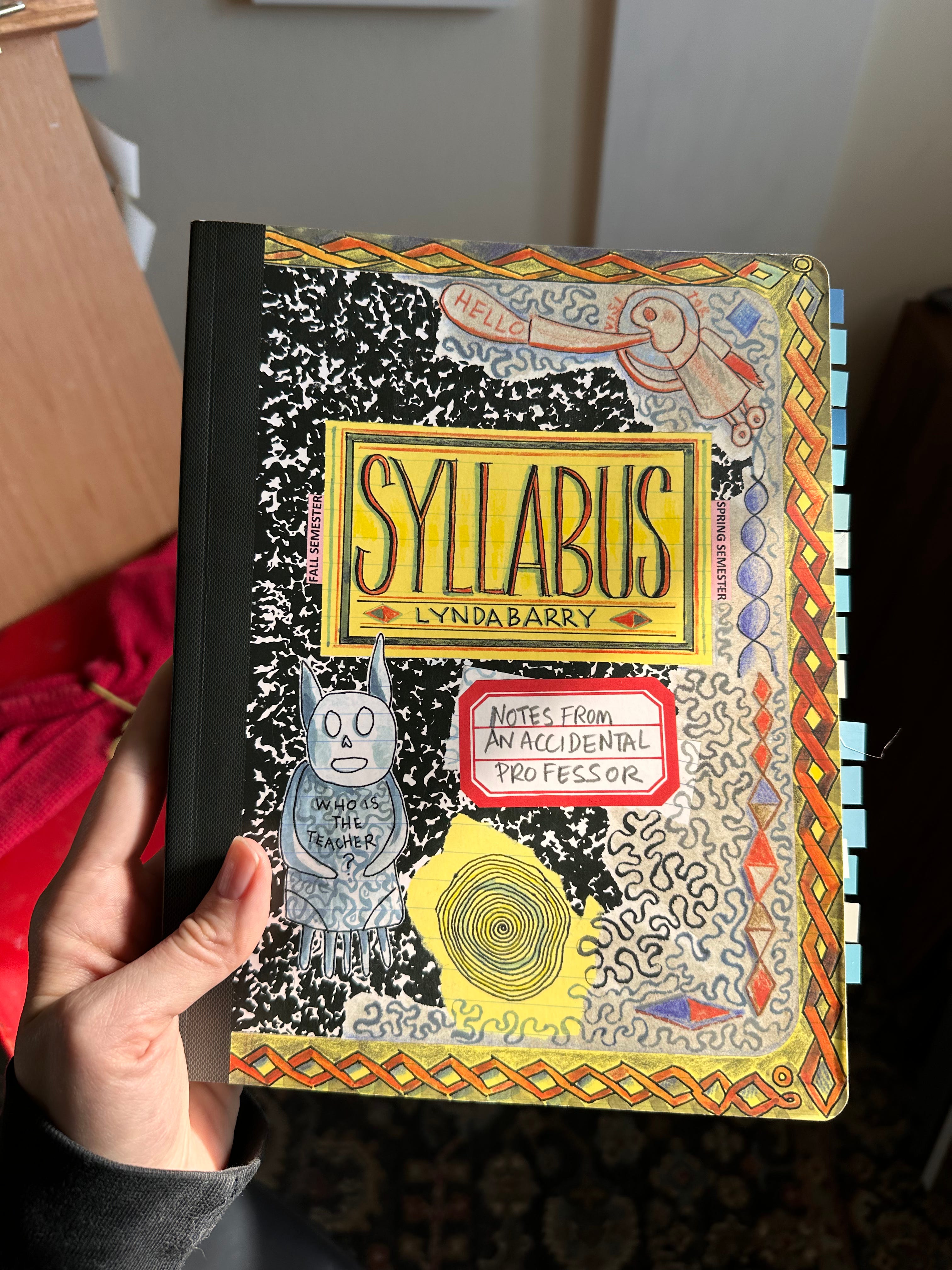
At first these thoughts felt like self-sabotage and spite acting in harmony, but then I read Syllabus by Lynda Berry. That book pulled the rug out from underneath me as to everything I thought I knew about drawing and art making as a consistent human practice. I was enamored by the way Berry teaches creative craft as a self discovery mechanism rooted in pleasure. (eat candy, draw with crayons) Nothing was about controlled outcome, everything was about practice and play. The only requirement was to show up, practice, and see what happens.
I spent all of art school learning to make work well and efficiently. To make art that would be perceived as quality to receive a good grade. A rigid and calcified process developed: take photos, arrange them (a la David Hockney) in Photoshop, paint on top of them digitally to rehearse my brush strokes, trace those digitally-painted edges on a panel or paper and slowly, meticulously make the painting exactly according to plan. This method wasn’t rooted in pleasure, but in perfection and efficiency.
My fear of not fitting in to the art world or never being good enough created a calcified manner of working on art that was stifling. Everything had to follow this process or I was going to waste materials and fail at what I was making. I had to follow this practice in order to make sure the work was defensible against the cruel hipster judges in the critique room. Art school was full of bullies, rigid rubrics, and the financial pressure to keep my scholarship. Fear followed me around in the studio and my adult life like an unwelcome ghost.
Yet reading Syllabus, I was imagining myself in an alternate reality where I took Professor Berry’s class instead of following my thesis mentor1.With the assignments in Syllabus, there was a level of play and permission that felt like a rebellion to the rigidity I fell into. Drawing and writing were integrated together rather than separate practices. Both of these ways of making art were about seeing, understanding how our minds work2, experimentation, and integrating our drawings/handwriting into how we tell stories about the world.
The best part, all of these drawings were happening in non-precious composition notebooks where play could live at the center.
So I went back to the dollar store, I got a $5 pad of watercolor paper, a box of crayons, more lined paper pads, and I started scribbling, ripping, and tearing them. These weren’t supplies that had a great cost of messing up with them. It wasn’t oil paint on an expensive panel. This was where I had to begin to play.
Suddenly, instead of having a rigid plan I started following the path of “what happens if?”
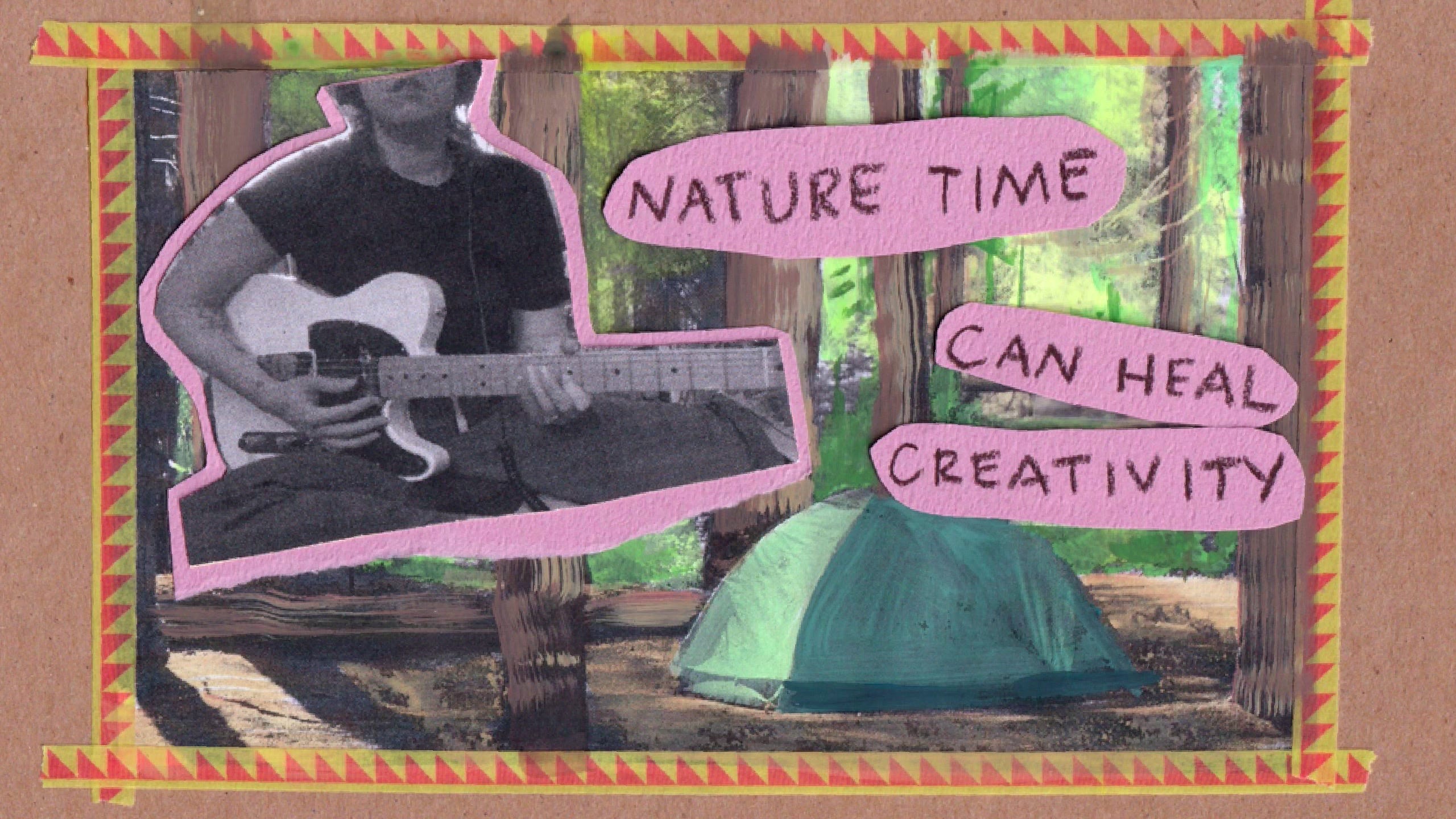
To my surprise, I was uncovering a voice I thought I had lost. My inner kid was guiding the craft instead of my safe, marketable, “will this sell” adult brain that had been poisoned by both the art world and the goblin of hustle culture. I was wrinkling paper and unraveling it. Instead of tracing photos, I printed them out on cheap copy paper and painted directly on top of them. It’s not archival! I didn’t care! I layered on patterned Washi tape, I wrote things out with crayons, played with old bubble letters, taped things together, put them on a wall and then completely rearranged them.
This was the kind of experimentation I should have been doing when I was in art school, but I never felt safe enough there as a neurodivergent, working class, femme-presenting person to do it. Art school wasn’t actually a safe space for creativity, there were rigid and limiting expectations on success determined by those holding the power. There was no way I could make like this then, but now I had to, for little me.
When I make a big discovery like this and find a process that continues to inspire me, it becomes something I long to teach to others. I know that we have all been taught a rigid way. Find your font, find your one niche, find your method, and stick to it. That path isn’t wrong, but I think we are all longing for ways to experiment with our hands and to give algorithms the middle finger.
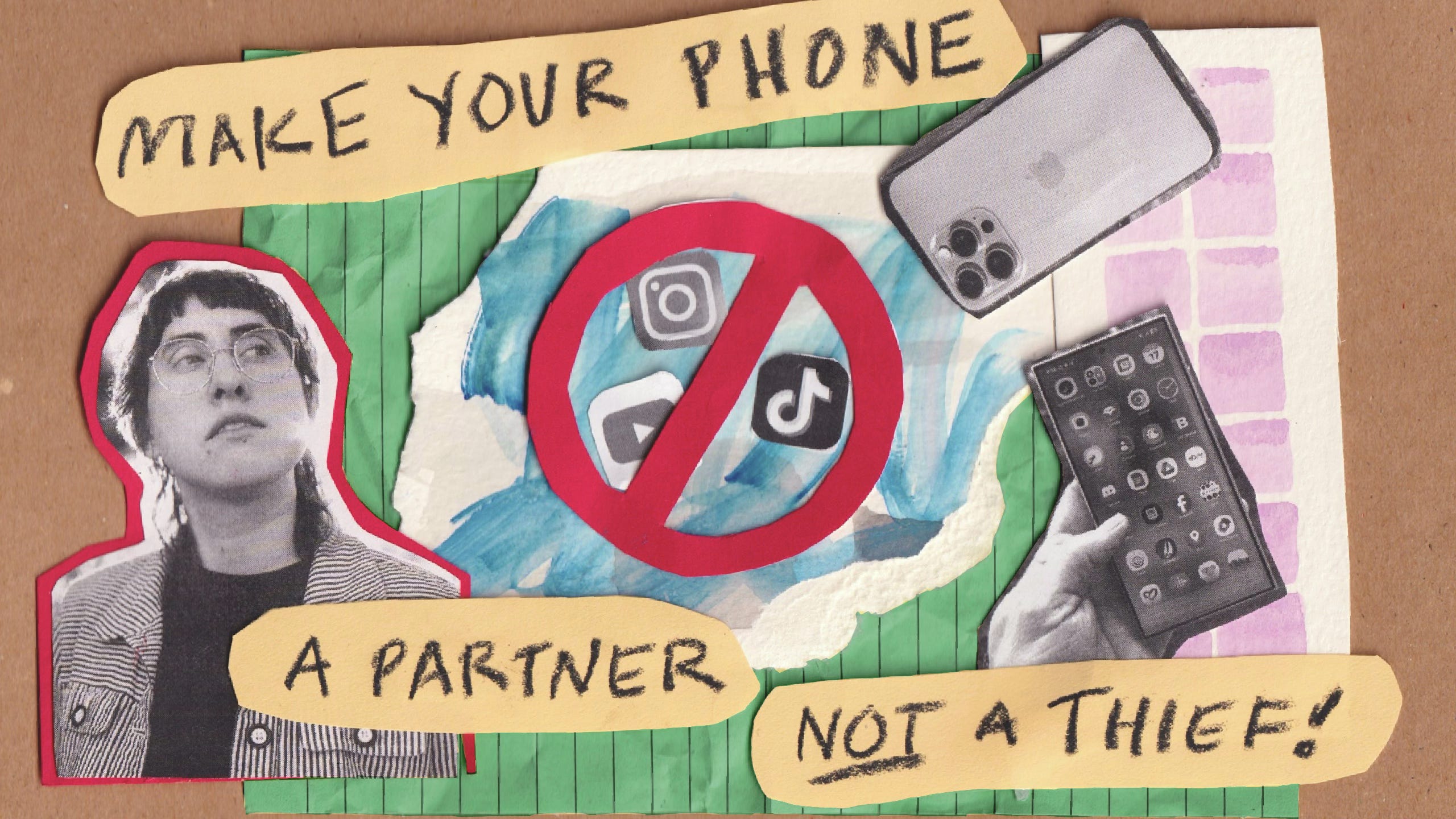
So many of us are longing to integrate what we do on paper with how we show up in the digital world. To have things that feel intentionally anti-ai and embody the wobbly human.
My past taught me that rigidity can still lead to beautiful art, but in these increasingly inhumane times, we need to find practices together that feel embodied, experimental, and deeply human.
I’d love to have you in class, but if you can’t make it, the takeaway I hope you carry with you is this: the things that make you uniquely human are vital, important, and deserve to be held with care and compassion right now! Please, make your art!
So, let’s get into what I’ll cover in the sessions so you can make an informed decision about joining us or not.
The class is the middle 2 parts of a 4 part larger workshop series I visioned up with my pal Kim of Oinopo Studio that starts this Thursday you can learn how both of these workshops fit together on my classes page!
Class 1: Physical Materials - Thursday, February 5th:
We will explore playing with the materials we foraged learning to rip, techniques for cutting fun shapes, and understanding how to layer.
Give ourselves permission to be weirdly human and draw things badly, from words that describe us to stick figures.
Build community while co-working together and uncovering what our materials are capable of.
Learn how to scan our creations using an iPhone.
Class 2: Digital Magic - Thursday, February 12th:
We’ll start with learning the interface of Procreate for the iPad and finding digital materials that feel just like your favorite physical ones
Then we will explore layers and importing by doing some gentle retouching to our collage scans from the past week
I’ll show you the features I use the most often when collaging and guide you through an assignment that will help you ease into the software and feel comfortable continuing on your own.
You’ll end the class with a collage that feels unique to your human voice.
Want to see the supply list and even more details? Here is a link to the class page:
Have questions about the class itself? Just respond to this email or ask a question in a comment! I’d love to hear from you.
Don’t have an iPad/iPhone and prefer not to work in the digital? My next class will be Getting Started with Drawing: Building a compassionate sketchbook practice and you can get on the waitlist for that right here:
Thanks for reading. And until next time, stay creative and find your own ways to persistently bloom.
the original class that Syllabus was based on happened in the spring of 2013, my thesis year of college. I swear, had I taken this class an entirely different version of my art would’ve emerged free from so much of the bullshit I felt obligated to take on in art school.
I deeply feel robbed that neuroscience of perception wasn’t taught at art school, and am eternally grateful I married someone who studied cognitive science.
I've been disheartened recently by the whole how to 'compete' with AI art (especially after doing some market research on Etsy and finding the majority being AI). I'll have to look for that book. I've come up with a similar approach of embracing slowness and human made, and I'm glad to find others who feel the n same way. I'll have to check out the book.
Ah handmade graphics look so much better in contrast to a lot of what's being cranked out at the moment... And it's very cool to see your journey with making, and my heart leapt a little because my copy of Syllabus literally arrived in the post this morning.